Running Google Ads on Multiple Platforms? Here's How to Measure What Really Works

Have you ever run campaigns across different advertising channels and wondered which one is actually bringing customers?
You’re not alone.
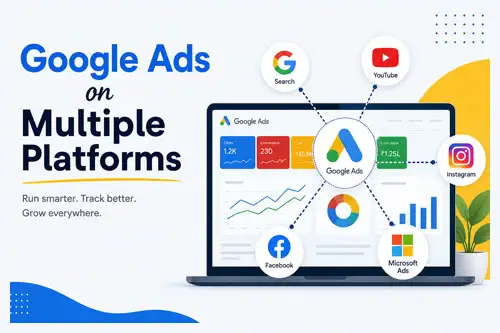
Many business owners, freelancers, and marketers trust the reports shown inside each platform. The challenge is that every platform wants to take credit for conversions. This is why Google Ads on Multiple Platforms can sometimes produce confusing reports.
If you’re doing Digital Marketing in Chennai, understanding how to measure campaign success is just as important as creating great ads.
Why Measuring Success Is Harder Today
A few years ago, measuring advertising performance was simple. A customer clicked an ad, made a purchase, and the platform received the credit.
Today, the customer journey is different. Someone may discover your business on Instagram, search on Google, read your blog, watch a YouTube video, and finally click your Google search ad before buying.
That is why Google Ads on Multiple Platforms requires a smarter way of measuring results instead of depending on a single dashboard.
Step 1: Make Sure Your Tracking Is Accurate
Before comparing campaigns, ask yourself one question.
Can I trust my data?
Imagine a supermarket where every fifth customer’s bill is missing. The sales report would never be accurate.
The same thing happens when conversion tracking isn’t installed correctly. Whether you’re tracking purchases, enquiry forms, phone calls, or newsletter sign-ups, everything should be recorded properly.
Without reliable tracking, Google Ads on Multiple Platforms becomes difficult to measure accurately.
Step 2: Don’t Trust One Platform Alone
Google, Meta, and Microsoft all measure conversions differently.
Sometimes more than one platform claims the same customer. That doesn’t mean the reports are wrong. It simply means the customer interacted with several ads before converting.
Instead of asking, “Which platform won?”, ask, “How did the customer reach us?”
This approach makes Google Ads on Multiple Platforms much easier to understand.
Step 3: Understand the Customer Journey
Very few customers buy after seeing just one advertisement.
For example, Ravi owns a furniture store in Chennai. He first notices your Facebook ad, later searches on Google, visits your website, and finally clicks your Google search ad before placing an order.
Looking only at the last click doesn’t tell the full story. Every interaction builds trust, which is why Google Ads on Multiple Platforms should always be evaluated as a complete journey.
Step 4: Look Beyond Sales
Sales matter, but they aren’t the only measure of success.
People may visit your website, watch videos, follow your social pages, or save your posts before making a purchase.
These actions show growing interest and help improve the long-term performance of Google Ads on Multiple Platforms.
Step 5: Compare Similar Goals
Don’t compare campaigns with different objectives.
A campaign generating 100 website visits isn’t automatically better than one generating 15 qualified enquiries.
Useful metrics include:
- Cost per lead
- Cost per sale
- Conversion rate
- Return on Ad Spend (ROAS)
- Customer acquisition cost
Using the right metrics gives a clearer picture of Google Ads on Multiple Platforms.
Step 6: Listen to Your Customers
Not every insight comes from analytics software.
Ask new customers, “How did you hear about us?”
Some will mention Google, while others may mention Instagram, Facebook, or YouTube.
Customer feedback often explains results that dashboards cannot, making Google Ads on Multiple Platforms easier to evaluate.
Step 7: Maintain Customer Records
Keeping customer records helps you identify:
- Which channel generated the lead
- Which source produced the sale
- Which campaigns created repeat customers
Combining CRM data with analytics gives a much better understanding of Google Ads on Multiple Platforms.
Step 8: Review Campaigns Regularly
Don’t wait until the end of the month.
Review campaigns every week. Check conversions, cost per lead, click-through rate, and website engagement.
Regular reviews help you improve Google Ads on Multiple Platforms before small issues become expensive problems.
Common Mistakes to Avoid
If you’re new to Digital Marketing in Chennai, avoid these common mistakes:
- Looking only at clicks instead of conversions.
- Ignoring tracking problems.
- Stopping campaigns too early.
- Trusting one platform completely.
- Focusing only on the final click instead of the complete customer journey.
Avoiding these mistakes will improve your results with Google Ads on Multiple Platforms.
Practical Example
Imagine you’re promoting a digital marketing course.
You run Google Search Ads, Instagram Ads, Facebook remarketing campaigns, and YouTube videos.
At the end of the month, each platform reports different conversion numbers. Simply adding them together doesn’t tell the real story because many customers interacted with several channels before enrolling.
This is why Google Ads on Multiple Platforms should always be measured using the complete customer journey.
Build a Smarter Measurement Strategy
Successful marketers don’t depend on a single report.
They combine accurate conversion tracking, platform reports, website analytics, customer feedback, and business results to make informed decisions.
If you’re serious about improving your campaigns or learning Digital Marketing in Chennai, remember this simple rule: Great campaigns don’t just generate clicks. They generate insights that help you improve every future campaign. Following this approach will help you get better results from Google Ads on Multiple Platforms.
Written by Shaju R S
Best Digital Marketing Freelancer in Chennai
Topic: Google Ads on Multiple Platforms