What Canva Gen Z Language Teaches Us About Branding
Why Is Canva Gen Z Language Getting So Much Attention?
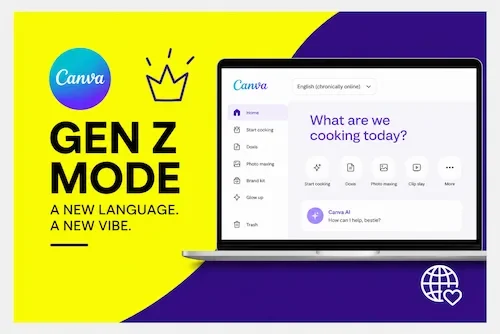
You probably know Canva as the tool you use to create presentations, Instagram posts, posters, videos, and documents. The interface usually feels simple and professional. Then Canva did something unexpected. It added English (chronically online) as a language option.
This Canva Gen Z language setting changes the way Canva talks to you. The tools stay the same, but the words become much more internet-friendly. Some familiar labels turn into playful phrases such as “start cooking” and “doxis.” Even Canva AI changes its tone.
That makes Canva Gen Z language interesting from a marketing perspective. Canva didn’t need to create another design tool. It changed the experience around the tool. That’s a small product decision with a surprisingly large social-media effect.
What Does Canva Gen Z Language Actually Change?
The clever part of Canva Gen Z language is that it doesn’t try to teach users a new product. You already know what Canva does. The company simply changes the microcopy, labels, prompts, and other interface language to match internet culture.
Think about it like visiting your favourite local shop. The products haven’t changed. The owner has simply started talking to you in the way your friends do. That small change can make the place feel more familiar. That’s essentially what the Canva Gen Z mode is doing.
Canva has also connected this tone with its AI experience. The Canva AI Gen Z approach makes the interaction feel less like you’re using formal business software and more like you’re chatting with someone online. That’s especially relevant because Canva’s own research says 90% of Gen Z respondents say they do their best work visually.
Why Is Canva Gen Z Language Such a Good Marketing Idea?
Here’s where Canva Gen Z language becomes more than a funny interface update.
People naturally share things that surprise them. A normal product update might get a few reactions. A strange new language option can make someone screenshot the screen, send it to a friend, post it on Instagram, or discuss it on Reddit. Recent online discussion shows people actively sharing the setting and telling others how to find it.
That’s the strength of Canva Gen Z marketing. The product becomes the content. Canva doesn’t have to explain why the feature is interesting. Users do that themselves.
A useful marketing idea often works this way. Give people something worth showing another person. The conversation can travel much further than a standard promotional post.
Is Canva Gen Z Language Actually a Product Feature?
Yes, and that’s what makes the Canva Gen Z feature particularly interesting.
This isn’t simply an Instagram campaign or a temporary advertisement. The Canva English chronically online language option sits inside the actual product. Canva has also publicly encouraged users to find the setting through its social channels.
That distinction matters. A campaign says, “Look at what we’re doing.” A product feature says, “Come and experience it yourself.”
The Canva new feature 2026 approach shows how product design and marketing can overlap. When the feature itself creates curiosity, the distance between product development and marketing becomes much smaller.
What Can Small Businesses Learn From Canva Gen Z Language?
You don’t need Canva’s budget to apply the same thinking. Canva Gen Z language gives small businesses a useful lesson: your brand doesn’t always need to sound formal to look professional.
A Chennai café, for example, could create a Reel using the kind of language its customers actually use. A cake shop could describe a new chocolate cake in a playful way instead of writing another generic “delicious and freshly baked” caption.
The trick with Canva Gen Z slang is understanding the audience first. Don’t add words like “rizz,” “slay,” or “bestie” just because they’re popular. If your customers don’t speak that way, the content will feel forced.
What Mistakes Do Brands Make With Gen Z Marketing?
The biggest mistake is copying slang without understanding the culture behind it. Canva Gen Z language works because the humour is connected to the product experience. It isn’t simply a collection of trendy words.
Another mistake is trying too hard. I’ve seen brands turn one casual Instagram post into a full personality change. Suddenly every caption contains slang, emojis, memes, and jokes. That usually becomes tiring.
Good Gen Z branding doesn’t mean talking like a teenager. It means understanding how your audience communicates and knowing when a relaxed tone makes sense.
Brands using Gen Z slang also need to remember that Gen Z isn’t one single audience. Age, location, profession, interests, and online communities all influence language. A phrase that works beautifully for one group may sound completely unnatural to another.
Can Canva Gen Z Language Become a Viral Marketing Strategy?
The Canva viral feature idea works because it has three useful ingredients: curiosity, participation, and shareability.
You see something unusual. You want to try it. Then you want to show someone else.
That’s a powerful combination. The Canva hidden feature angle also helps because people love discovering something they didn’t know existed. Canva’s own recent post even encourages users to switch the setting and search specific terms for fun.
For marketers, this is a good reminder that Canva marketing strategy doesn’t have to mean producing another polished advertisement. Sometimes the best marketing asset is a product experience that makes people curious enough to talk about it.
What Does Canva Gen Z Language Tell Us About the Future of Branding?
The bigger lesson from Canva Gen Z language isn’t about slang. It’s about relevance.
The way people communicate online keeps influencing how they expect brands and software to communicate. Gen Z internet culture has already moved beyond social media. It now influences workplace communication, visual content, product design, and even how people interact with technology.
That’s why the Canva interface update feels more significant than it first appears. The company has recognised that language is part of user experience. A button doesn’t always need to sound like it came from a software manual.
For me, the smartest part of Canva Gen Z language is that Canva didn’t change what the product does. It changed how the product feels. That’s a much harder marketing lesson to copy.
If you’re a business owner, ask yourself a simple question: does your brand sound like your customers, or does it sound like your company brochure?
You don’t need to fill every post with Canva internet slang or chase every new phrase. Instead, pay attention to how your audience talks, what they share, and what makes them stop scrolling.
That’s the real lesson behind this Canva Gen Z language experiment. Good Gen Z marketing isn’t about pretending to be young. It’s about being culturally aware, relevant, and confident enough to communicate like a human.
And that’s why I think this Canva Gen Z language feature is worth watching. It may look like a Canva funny feature, but underneath the humour is a smart idea about product design, community, and modern branding.